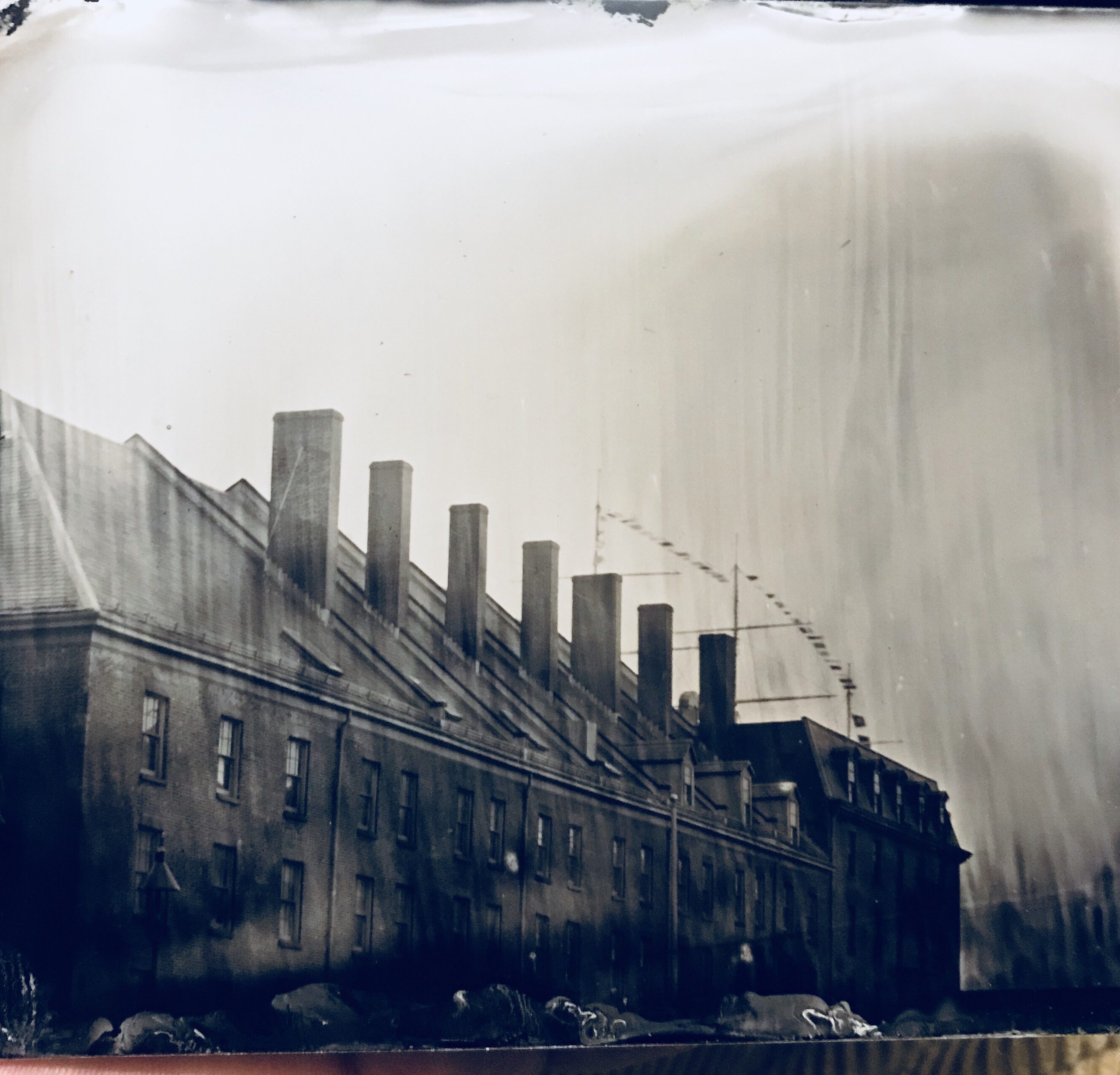
We have had a fine stretch of weather this November. Sunny, and unseasonably warm for the most part, but today is a rain day, so now I can get a few indoors projects started.
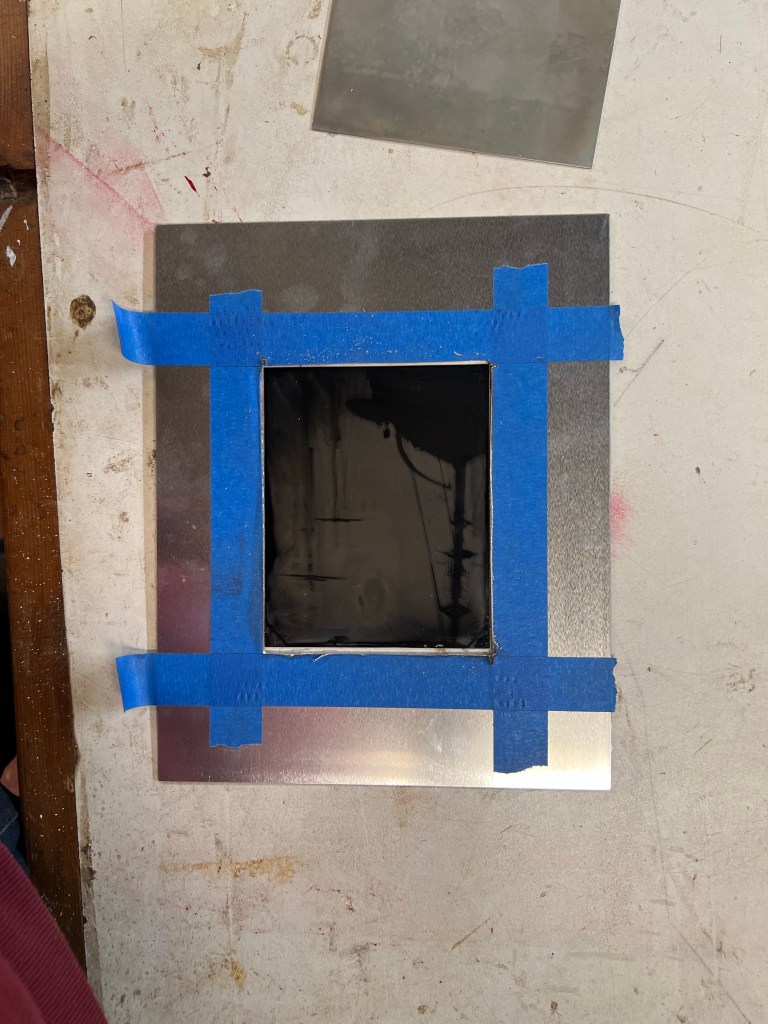
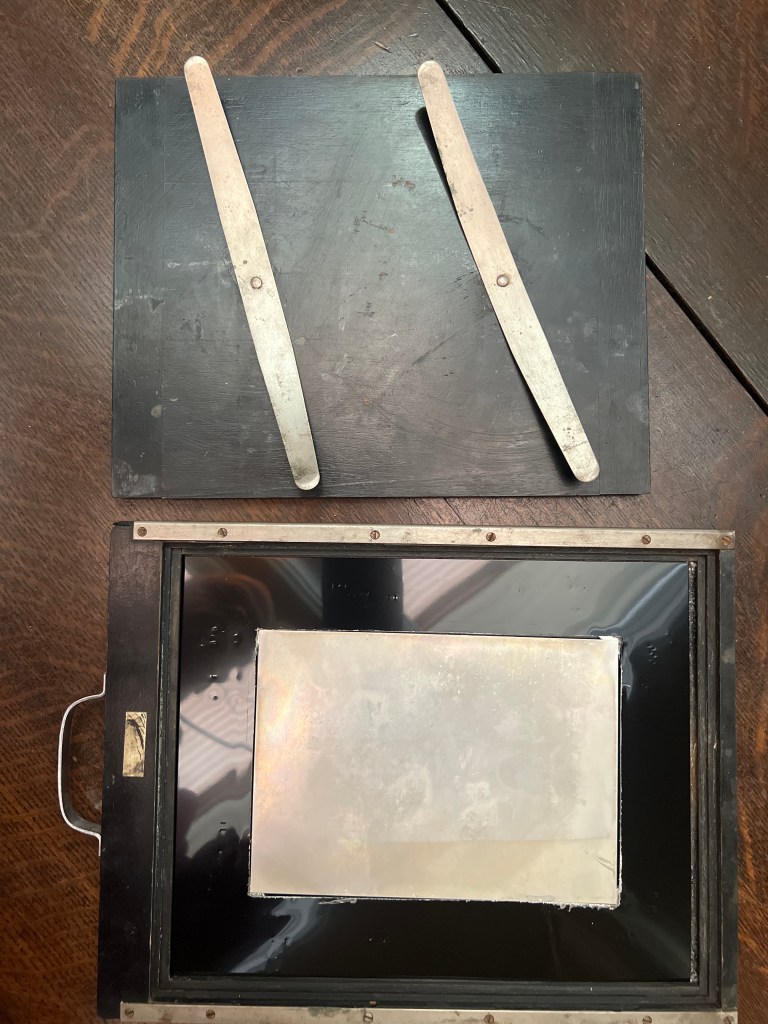
First off I decided it was time to make some plate adapters. The reason for this is so I do not need to carry around a separate camera back for each sized plate, 4×5, 5×7, and 8×10…
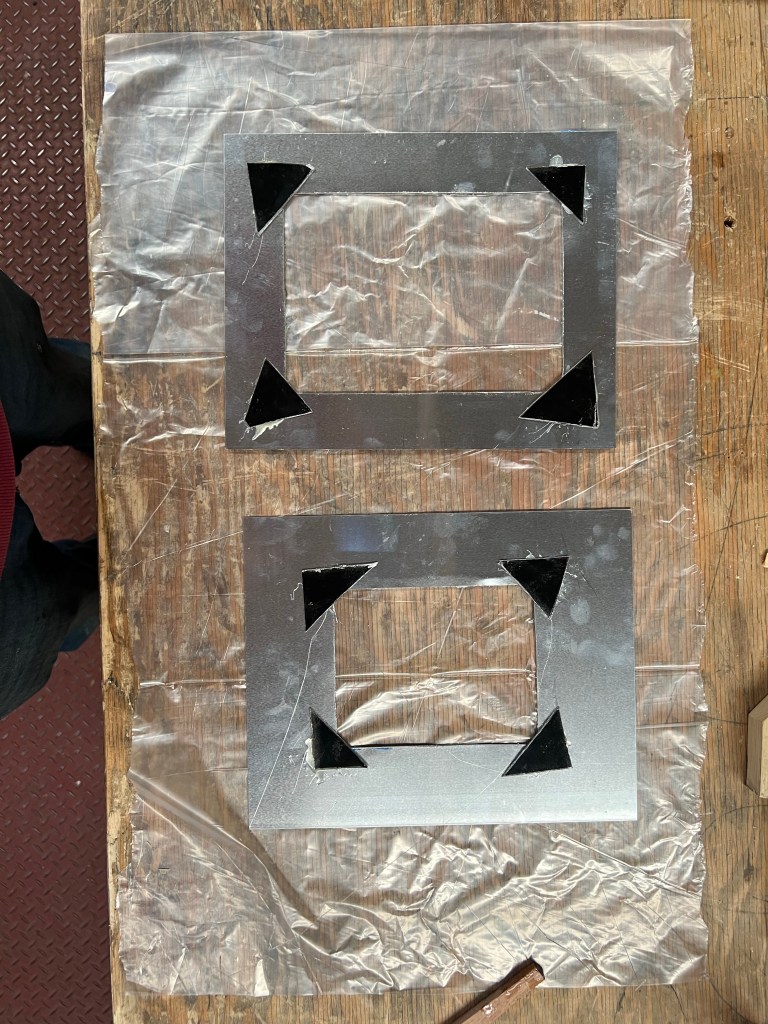
A simple enough solution. Just take an 8×10 plate, and cut a suitable sized hole, and the epoxy tabs in the corners. The tabs serve two functions. First is to keep the sensitized plate in place, but more importantly to insure it is on the same plane as the front of the adapter. This will keep everything in focus.
To help understand this you need to remember the workings of a large format camera. To focus, and compose the shot, you open the lens up to allow as much light in, then under the dark cloth you can view the image which is both upside down, and inverted horizontally. This may seem a little awkward at first, but I find that it is actually a benefit as it forces you to inspect the whole image without the distraction of seeing what you want, and not what is actually there. The brain can very often filter out parts of an image. We’ve all seen it. You take what you think is a beautiful shot, say two friends sitting together on a park bench, but when you view the finished image you notice everything in the background that was not there before. The tree that looks like it is growing out of the top of their heads, the odd looking person in the background of questionable character, the horizon so out of wack that you can just imagine them sliding off of the bench. You swear that is not what you saw when you composed the shot, and in fact that is somewhat true. You saw what you wanted to see, and filtered out everything else.

Above is an image of the 8×10 camera back with the focusing glass. It is marked with a grid to aid in composition. You’ll also notice the corners are trimmed. This allows air to escape, and enter as you focus. If not for these the bellows would not draw.
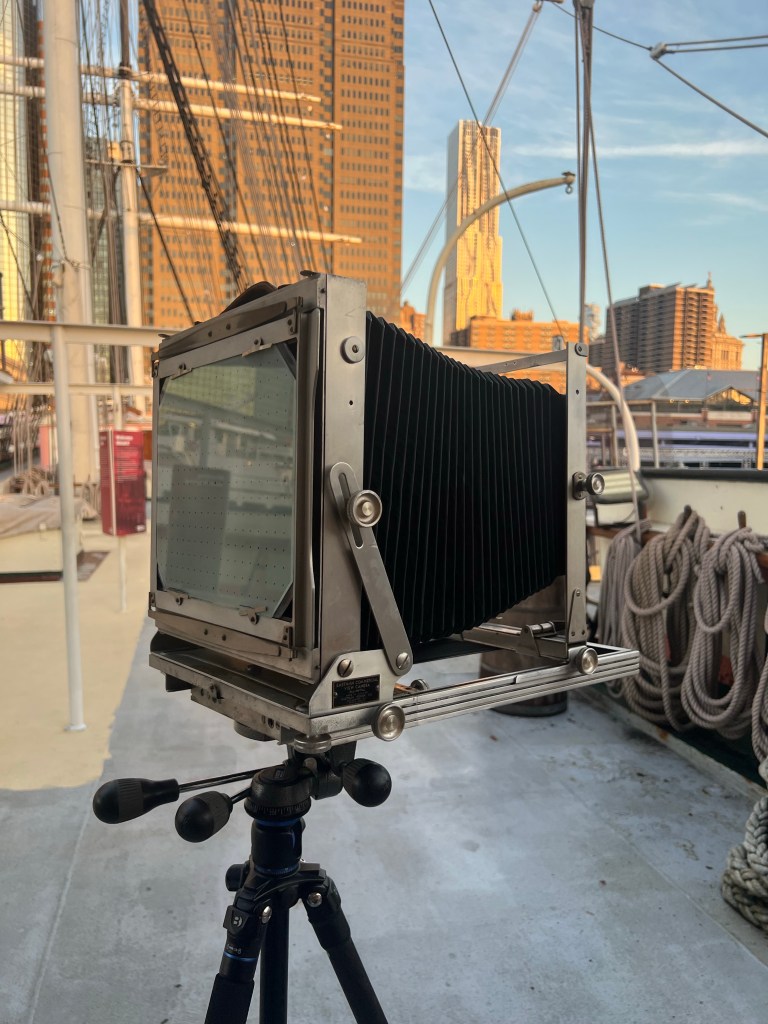
Another view of the back. This is set up in what is referred to as the Landscape mode. The plate holder is inserted from right to left between the camera body, and the focus glass.
This may at first seem like a rather complicated process, but the reason it is set up this way makes sense of it. Remember that you have composed, and focused the image on the ground glass, and now your plate has been sensitized, placed in the holder, and now must be put in the camera. The sensitized surface of the plate must end up on the same focal plane as the ground glass you focused on. So, the plate holder just pushes the glass, which is held in place by leaf springs, out of the way.
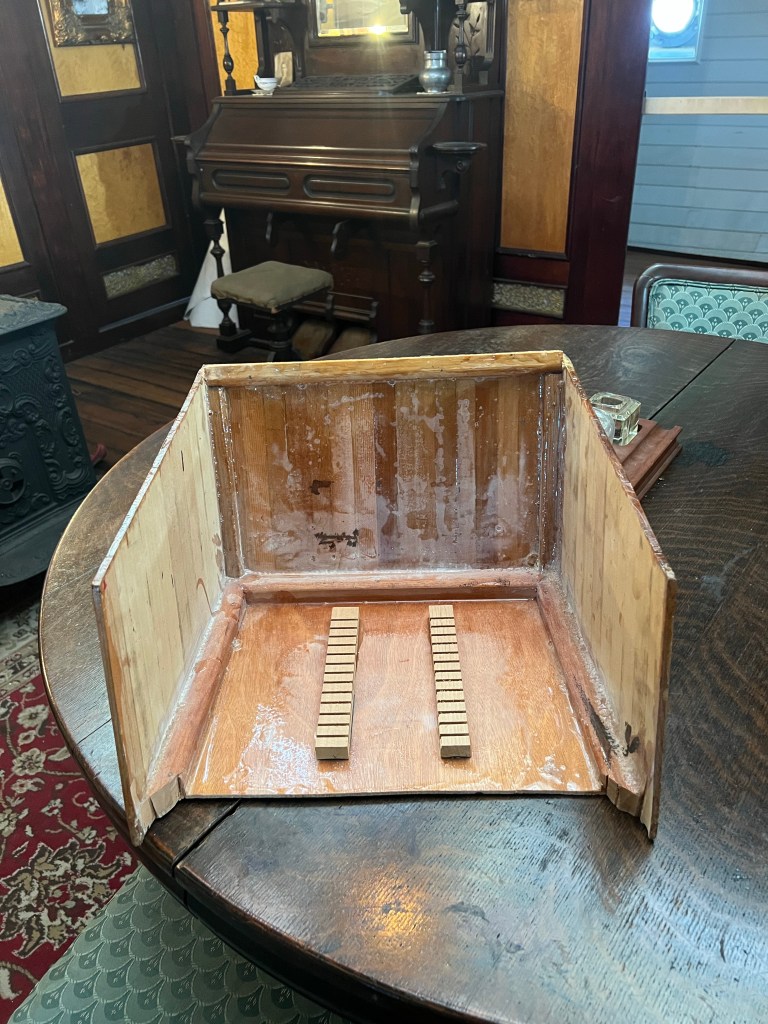
Whilst I was waiting for epoxy to set I worked on another small project. When the plates are washed they then need a place to dry before varnishing, and a place to dry after. I have a small folding rack, not unlike what you would use for dishes, just smaller. It takes up space though, and that is a valuable commodity when touring.
The solution was rather straightforward. Just fabricate two pieces of cedar with slits, and attach them to the inside of the dark box insert.
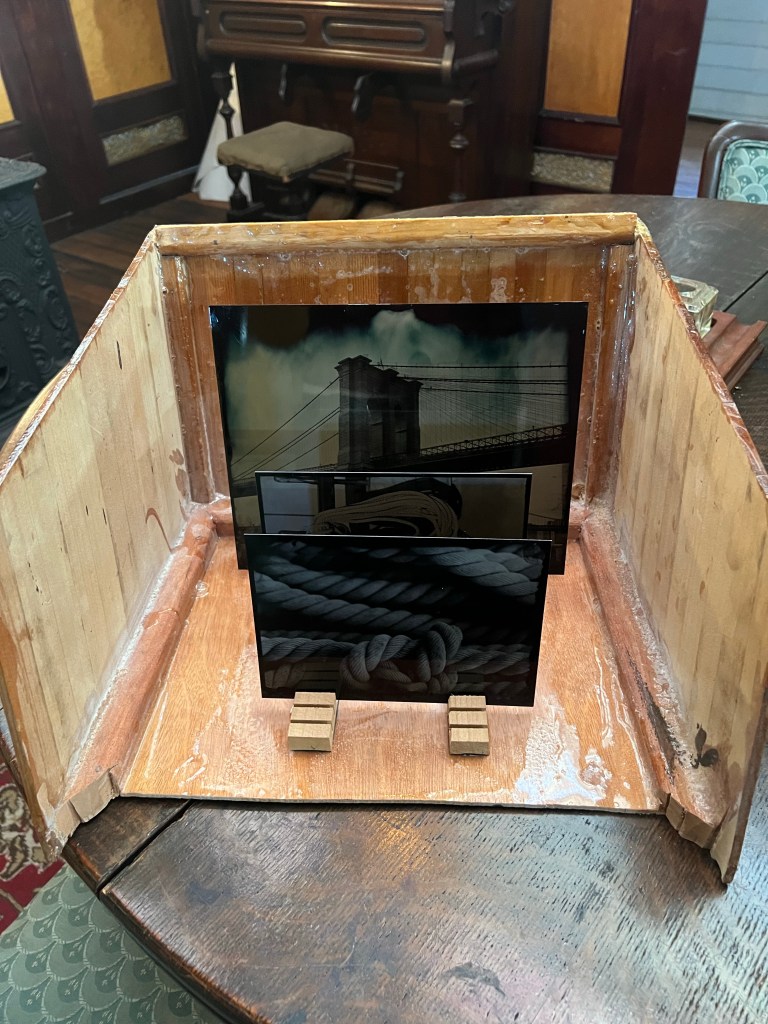
All it needs now is a coat of varnish, and it’s good to go.
Hope you all had a Happy Thanksgiving. I walked to Chinatown to gorge myself on dumplings. Time for a nap now.
 Webster’s Wet Plate
You must be logged in to post a comment.