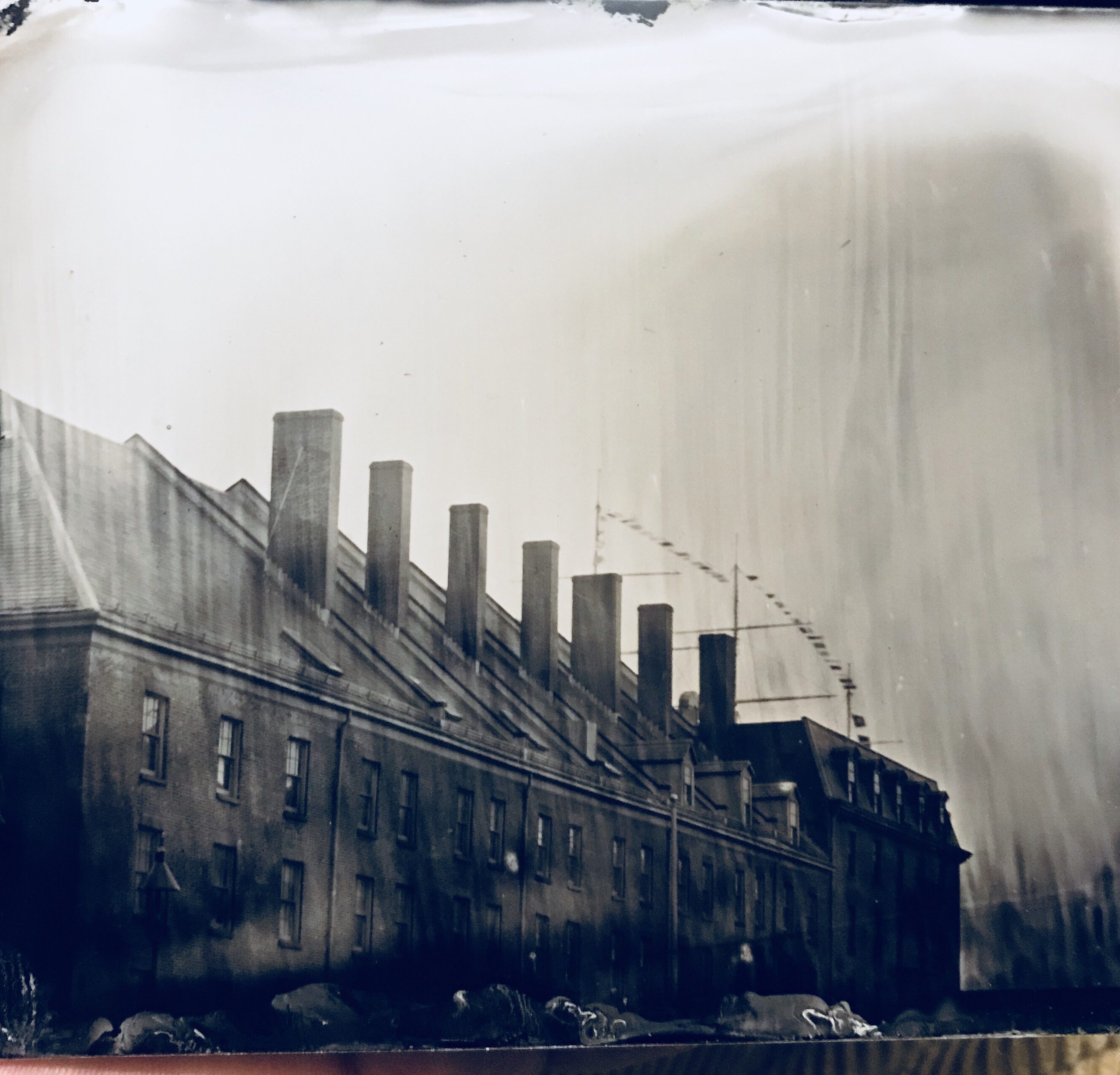
Rain is in the forecast for most of today, and I shall take advantage of it by getting some organizing done, and some printing. But, before that, here is an update on my wet plate work.
I am always looking for ways to reduce the weight of gear that I haul around. Most recently I have been adapting my plate holder, as mentioned in my previous post. This will eliminate the need to carry a 4×5, and a 5×7 back.
The weight of the plates themselves is impressive, but I can eliminate those. I’ll just need to arrange drop off and pickup points, much like hikers on the A.T. It will take a little organizing, route planning, but that is all part of the adventure.
Still searching for a better darkout cloth for the box. What I have now works, but it is rather bulky, and those turned wooden legs that get screwed to the bottom of the box are solid maple. Nice looking, but heavy. None of these items comes even close to the weight of the water that I need to carry. Not just my drinking water, but the water for processing, mainly plate washing.
The developer gets washed off easily enough, but the fixer I use, sodium thiosulfate, needs a rather large amount, more than I can haul around. If this fixer is not sufficiently removed it will darken, and degrade the image over time.
I have found two solutions to this problem. The first is to coat the plates with a thinned out film of vegetable glycerin, then cover the surface with a sheet of acetate, or waxed paper so it will not dry out. Then, when convenient, I can give the plates a thorough wash.
The next solution is using a different fixer. One that does not take as long to work, seconds rather than minutes thus not having as much time to bond with the colloidian making it easier to wash out.
This did not require much research. The fixer that was traditionally used fit the needs that I was looking for. Just a few seconds to fix a plate, and then washed in a few changes of water. The catch? potassium cyanide. A very weak solution at %2, but still dangerous. One of the cautions is to NEVER let it get in contact with an acid, thus creating hydrogen cyanide gas. They say it smells like almonds, and could very well be the last thing you smell. Did I mention that the developer, the step before fixing, is an acid?
I spent a good six months doing research on using potassium cyanide (KCN) as a fixer. Watched numerous videos of some of the most respected Tintypist/ambrotypist, and they were all in agreement in both the hazards of working with KCN, but also the very straight forward, and easy steps to avoid mishaps.
- Keep it away from any acids.
- Store in a well marked plastic bottle, not glass!
- wear gloves when handling
- work in a well ventilated area
- keep away from acids
So, I prepared a %2 solution a few days ago, outside. Poured it into a well marked plastic storage bottle, and secured it in one of the bottle holders on the trailer.
Down to The Bridge for another plate shooting session. Box set up, silver nitrate poured into bath box, developer mixed, colloidian poured on plate, placed in bath, loaded into film holder, exposed in camera, developed (ACID)!!!, washed, washed washed! Now the moment has come to try the new fixer.
This was fast! I also see an improvement in both contrast, tone. I was very cautious. Washed that plate like there was no tomorrow before putting it in the fixer. Very happy with the results.
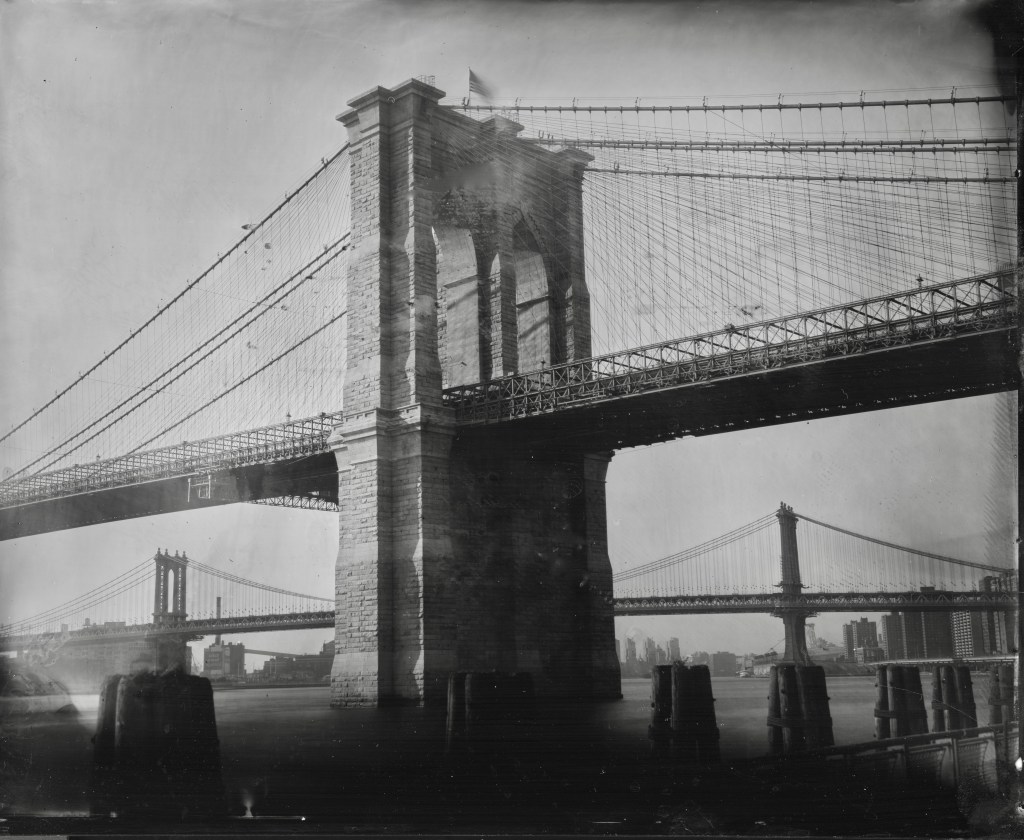
I find this whole process fascinating, and look forward to many years of creating images.


You must be logged in to post a comment.