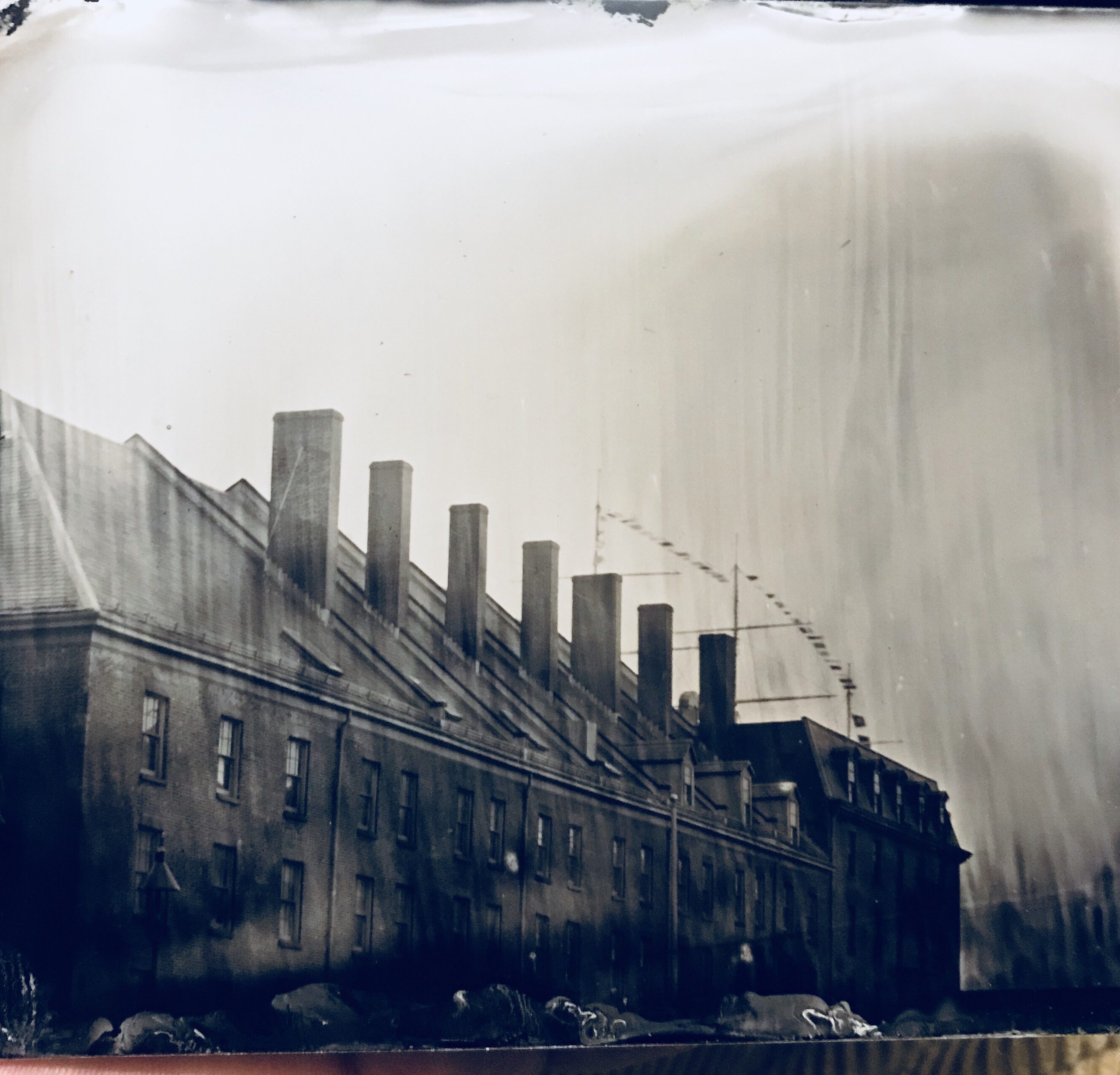
“Sweetpea”, my bicycle, is my most prized possession, and I would part with most everything else I own before giving it up. Next on the list, or certainly in the top five, would be the Kodak 8×10 commercial view camera.

I had tried numerous times to purchase this model, but was outbid on every occasion, and had all but given up when I spotted one being offered online. The starting bid was within my financial range. So, I put in a bid, with the full expectation that I would once again be outbid. Later that day my phone pinged, informing me it was time to pay, as I was the winner.
Elated that I was now the owner of a large format camera I wired the funds, and made contact with the seller to arrange pickup. As luck would have it, it was just an hours train ride away. Tickets reserved!
It was a beautiful Fall day, and the ride up to Brewster, NY was stunningly beautiful with the foliage at its peak. I met up with the seller in the station house, examined the camera as well as a nice lens that he would offer to sell. Cash, and a handshake, and I was back on the train, back to The City.
I don’t know if I even looked out the window on the return ride. As soon as the train pulled out from the station I opened the box, and pulled out my new camera.
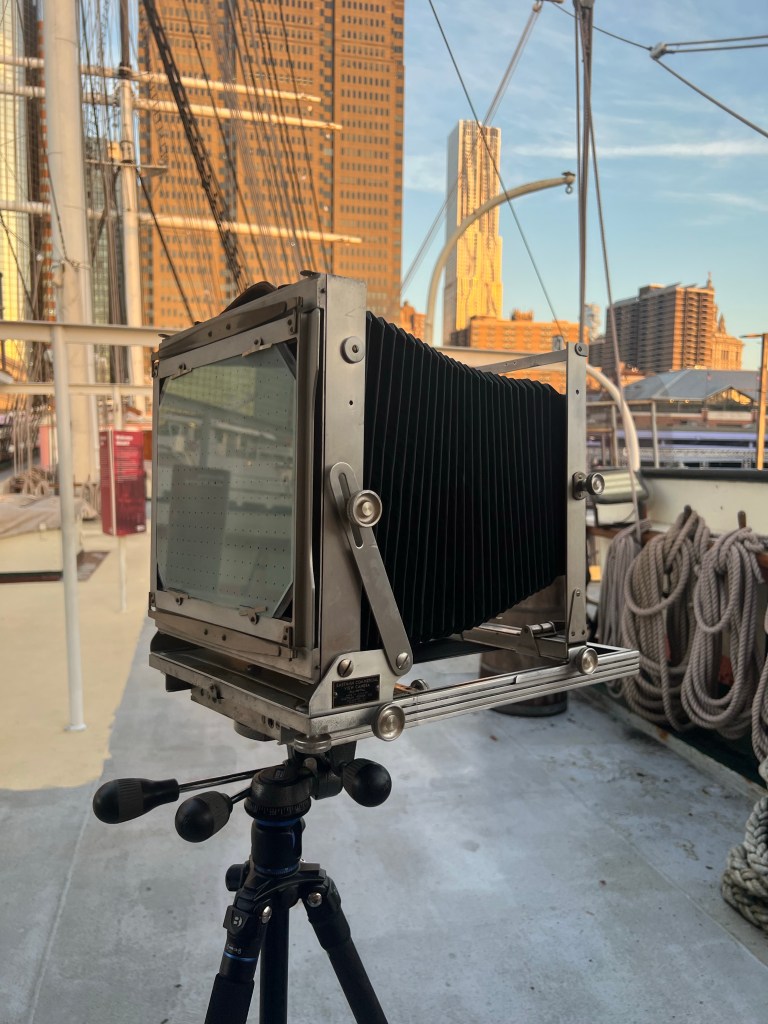
This is not a point and shoot! It is not all that complicated though, and I was fortunate to have used a 4×5 Crown Graphic for many years, so I was some what familiar with how it should work.
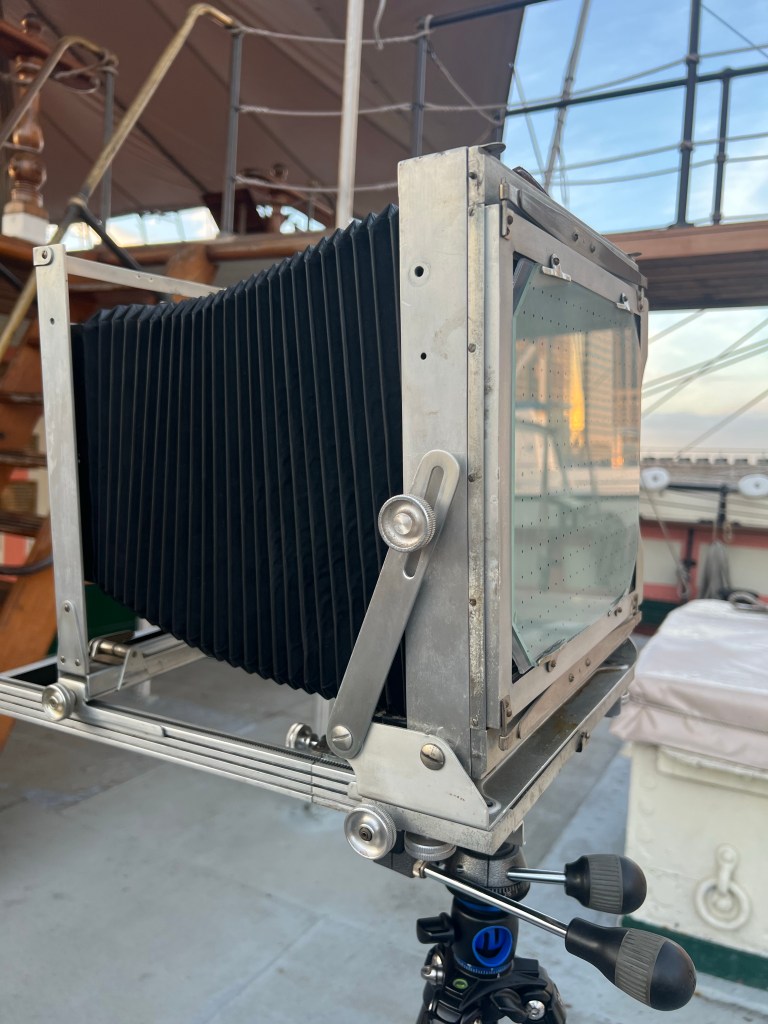
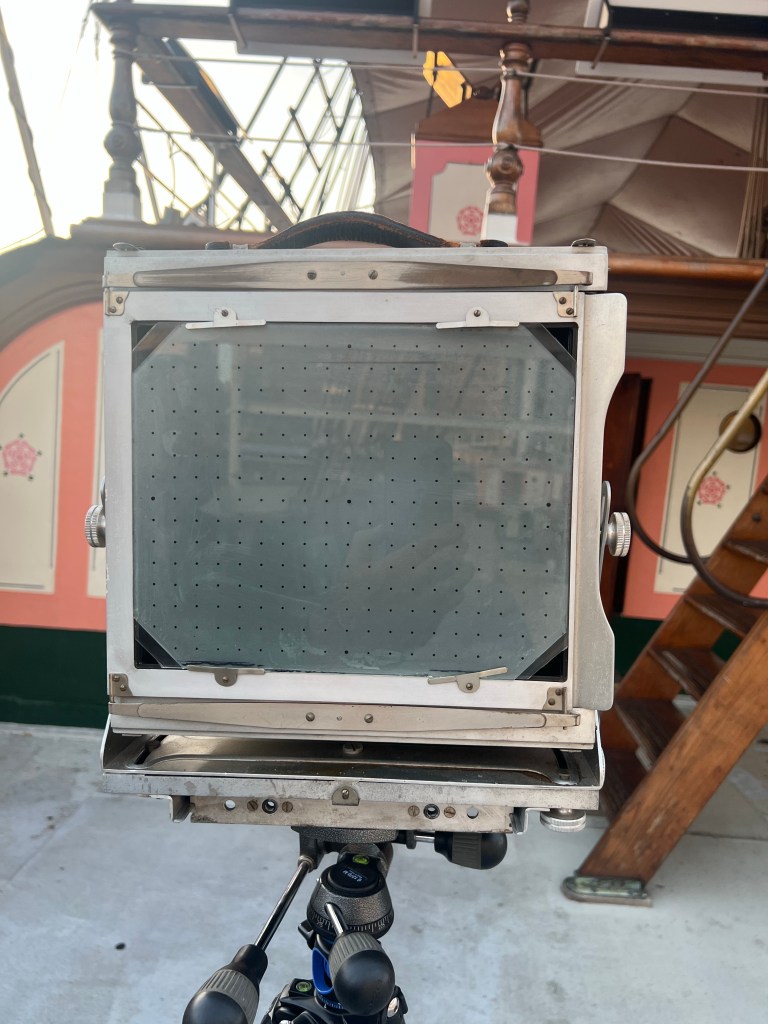
To the novice it may seem rather intimidating, but all it is is a box with a hole in one end, and I could easily show most anyone how to perform the most basic functions, and have done just that on a few occasions when out making tintypes.
Before the advent of roll film, images where formed on glass as an ambrotype, or glass plate negative, or as a tintype. This requires a plate holder which allows the sensitized plate to go from the darkroom, to the camera where it will get exposed, and then back to the darkroom for development.
The ambrotype, and tintype are one offs, meaning that if you wanted another portrait, or still life image, a whole new plate would need to be made, and if you wanted a larger, or smaller format, say a 4×5, rather than an 8×10, then a new camera back, or a different camera would need to be used.
Why? Because the photo enlarger was not invented yet, and any reproductions would be done using the contact printing method. So, if you wanted an 8×10 print, then a suitable sized paper would need to be sensitized, and in the early days of photography you would do this yourself, no ready made photographic paper for sometime yet.
This is all to explain why the view camera is so large. Want an 8×10 print? You’ll need and 8×10 negative.
For this camera I have three different backs. That is to say I can use the same camera, and by switching out the back plate, I can change the format size. Easy enough, though it means more to haul around. The simple solution to that is a modified plate holder.
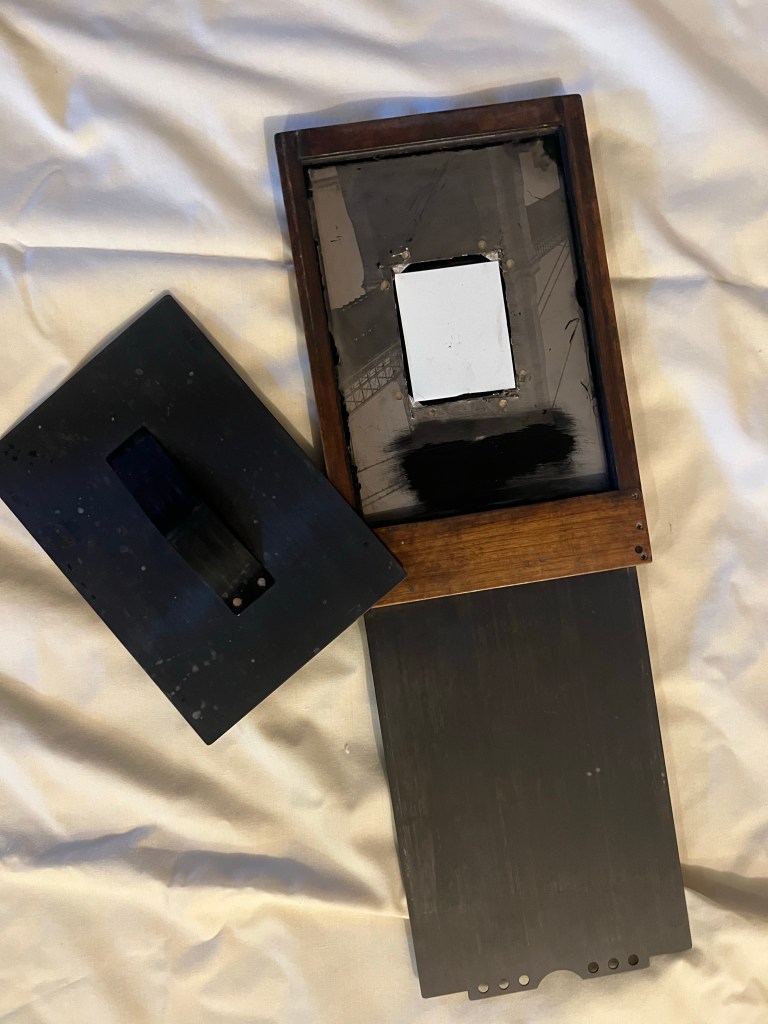
The above image shows just that. I created this modified plate holder so that I could shoot a smaller test plate for judging exposure. I could do the same with my 8×10 plate holder which would allow me to still shoot 5×7, and 4×5 plates without the need to carry the corresponding backs. Less gear equals less weight!
A video will be posted soon to show the whole production from loading, and unloading, setting up, and shooting a plate, development, and varnishing.
 Webster’s Wet Plate
You must be logged in to post a comment.