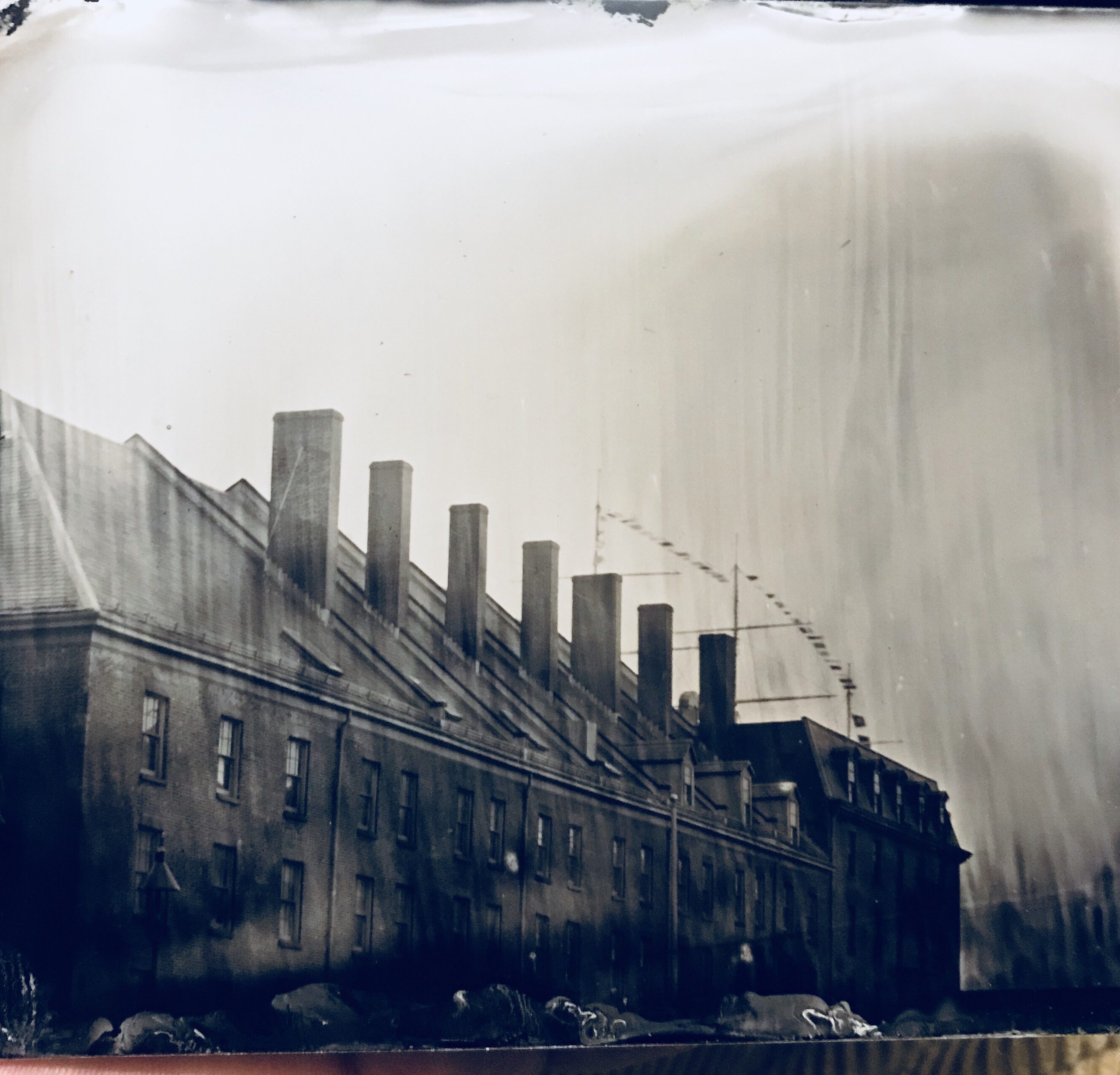
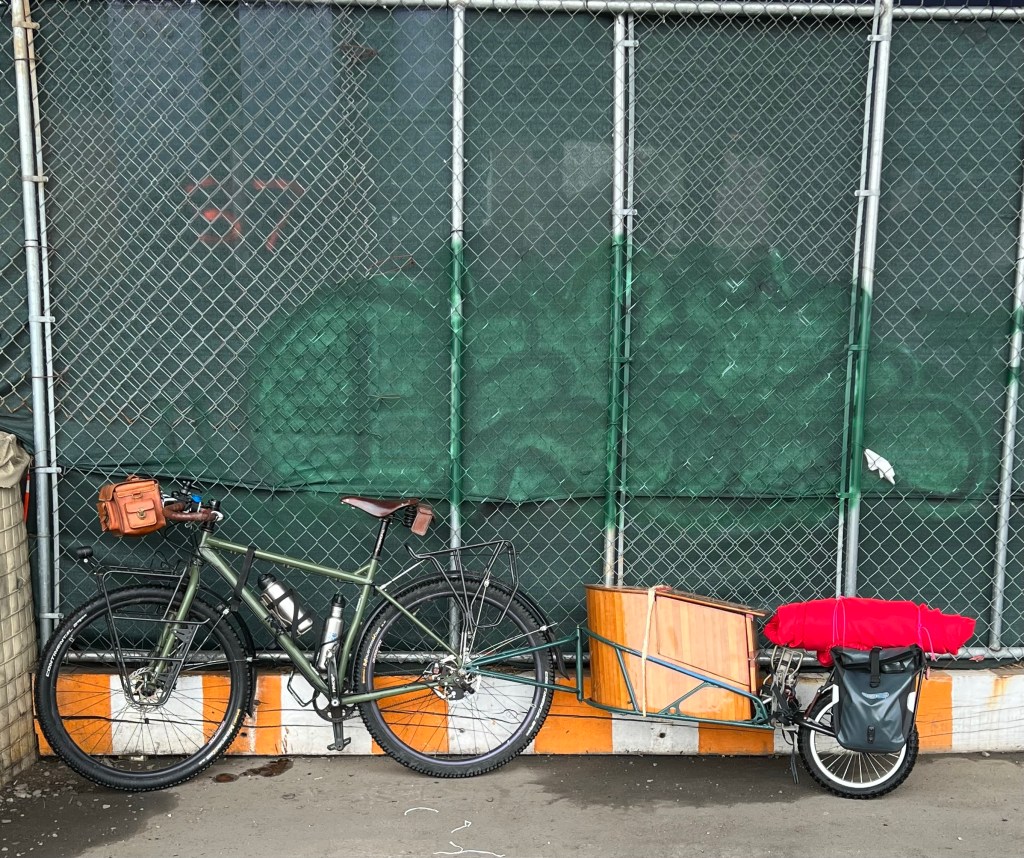
At long last I have done a test ride with my portable dark box. The ride it self was short, just down the street to my favorite spot with a view of the Brooklyn Bridge. Always a willing subject.
I had loaded up the trailer the night before in hopes of getting an early start after doing some baking for a local school. Sixty five cinnamon buns, and coffee for teachers. With that done, I hooked up the trailer, and headed out.
It felt sluggish at first, but that is always the case when hauling a load for the first time in awhile. All in all it handled well. Just a matter of getting reacquainted with a loaded bicycle.
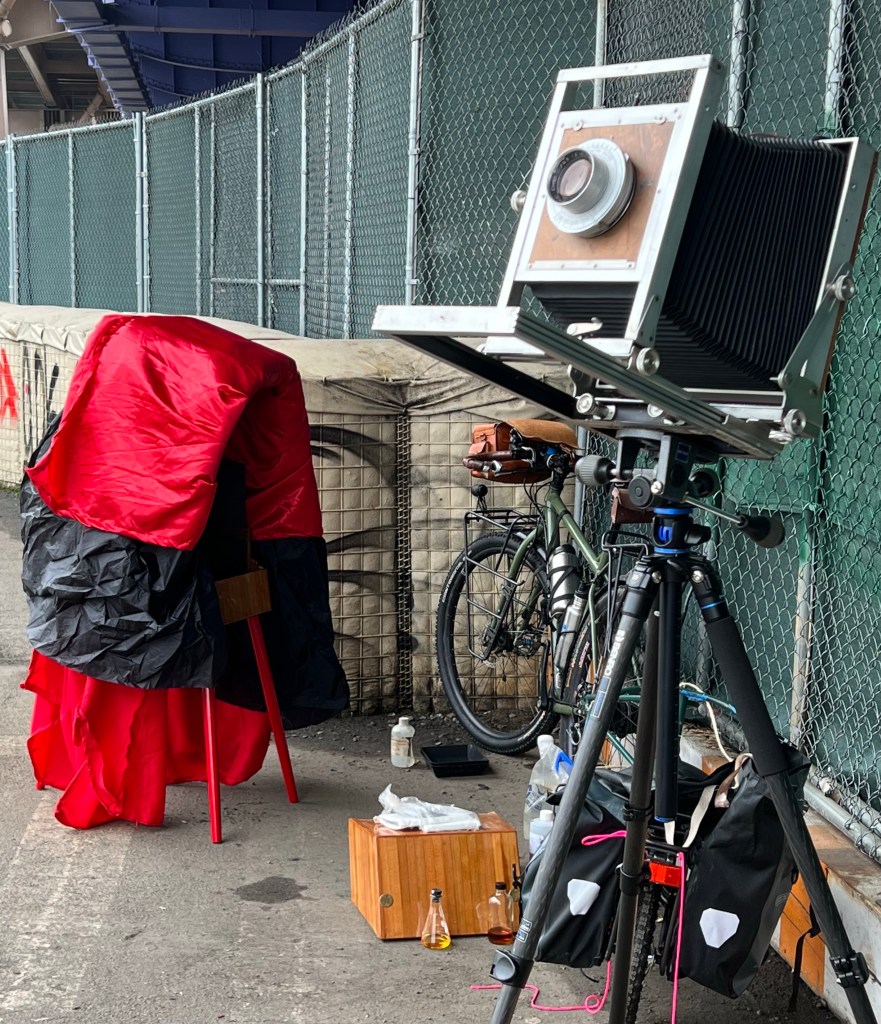
On arrival at my spot I began a timer. Curious as to how long it would take to set things up, and pour a plate. Eighteen minutes. Not bad for the first time. With practice I hope to get it down to less than fifteen minutes.
Most of the gear survived the trip, though I did manage to spill some silver nitrate. Can afford to do that. Stuff is not cheap. The camera set up, and a plate poured. A little overcast, but still plenty of UV light available. Aperture set to f16, plate loaded into holder, and first tintype exposed.
Now the true test! How will the dark box do? Will the curtains block out the UV? Will I have enough elbow room to work? Under the curtains I go. Plate removed from the holder, developer poured, and the twenty second count begins. Half way through an image begins to show. This is a good indication of proper exposure. If an image appears to soon it is an indication of over exposure, and if the plate was underexposed the image would take longer to appear.
When I was satisfied with development I arrested it by pouring water over the plate. Water is heavy, and I need to carry several litters for this process, and though there are places throughout The City where I can top off it is good practice to be conservative with it.
The water at first appears oily on the plate. This is an indication that developer still remains, and more water is added till this streaky, oily looking appearance is gone. Now for the magic part!
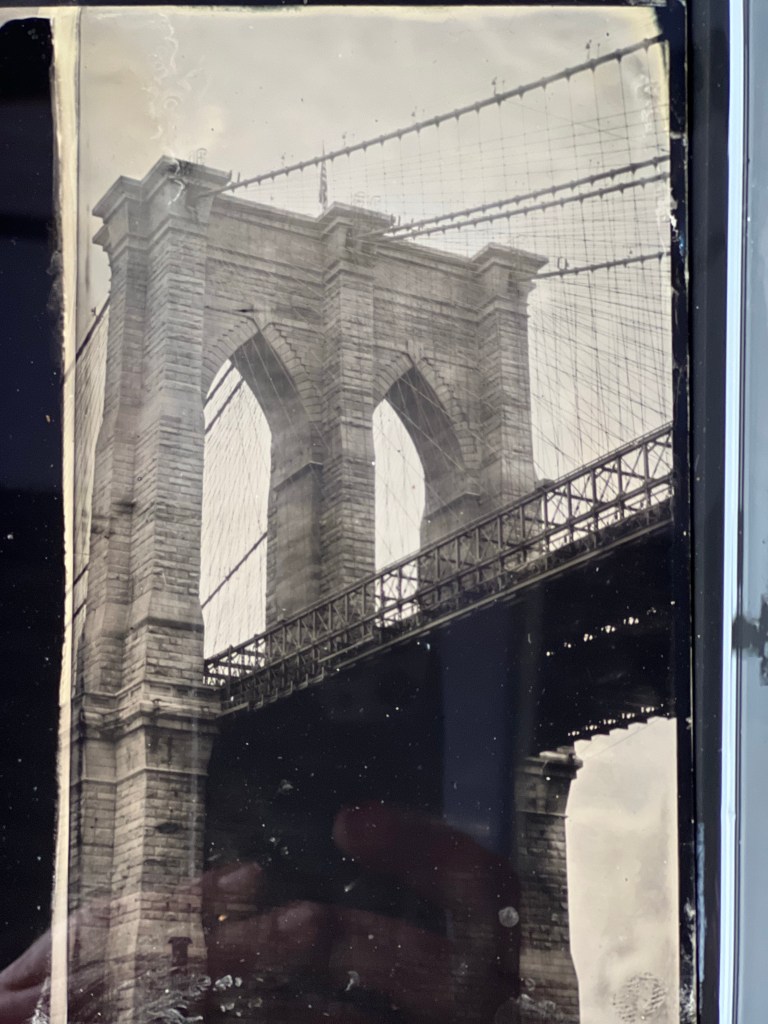
The image on the plate at this point is discernible, but it looks more like a strange negative. It is safe now to be out in the light, so out from under the curtains I go. Time to fix the image. This step removes unexposed silver halide, the part of the surface that was light sensitive. At first the image clouds over and seems to vanish, and then it reappears as a positive. This step, the fixing, is always magical to me, and I hope never to be unamazed by it.
At this point the plate should be washed, but as water on the road is scarce, I followed a recommendation of coating the plate with a glycerin/ water solution. This will prevent the plate from drying out before I can get to running water.
I am happy with how the whole setup worked, and other than spilling some silver nitrate, all went well. The remainder of the morning will be spent cleaning, and filtering, cleaning silver nitrate of of the plate holders, and everything else.
I am working at making Friday my wet plate day. No work. Just image making.
 Webster’s Wet Plate
You must be logged in to post a comment.