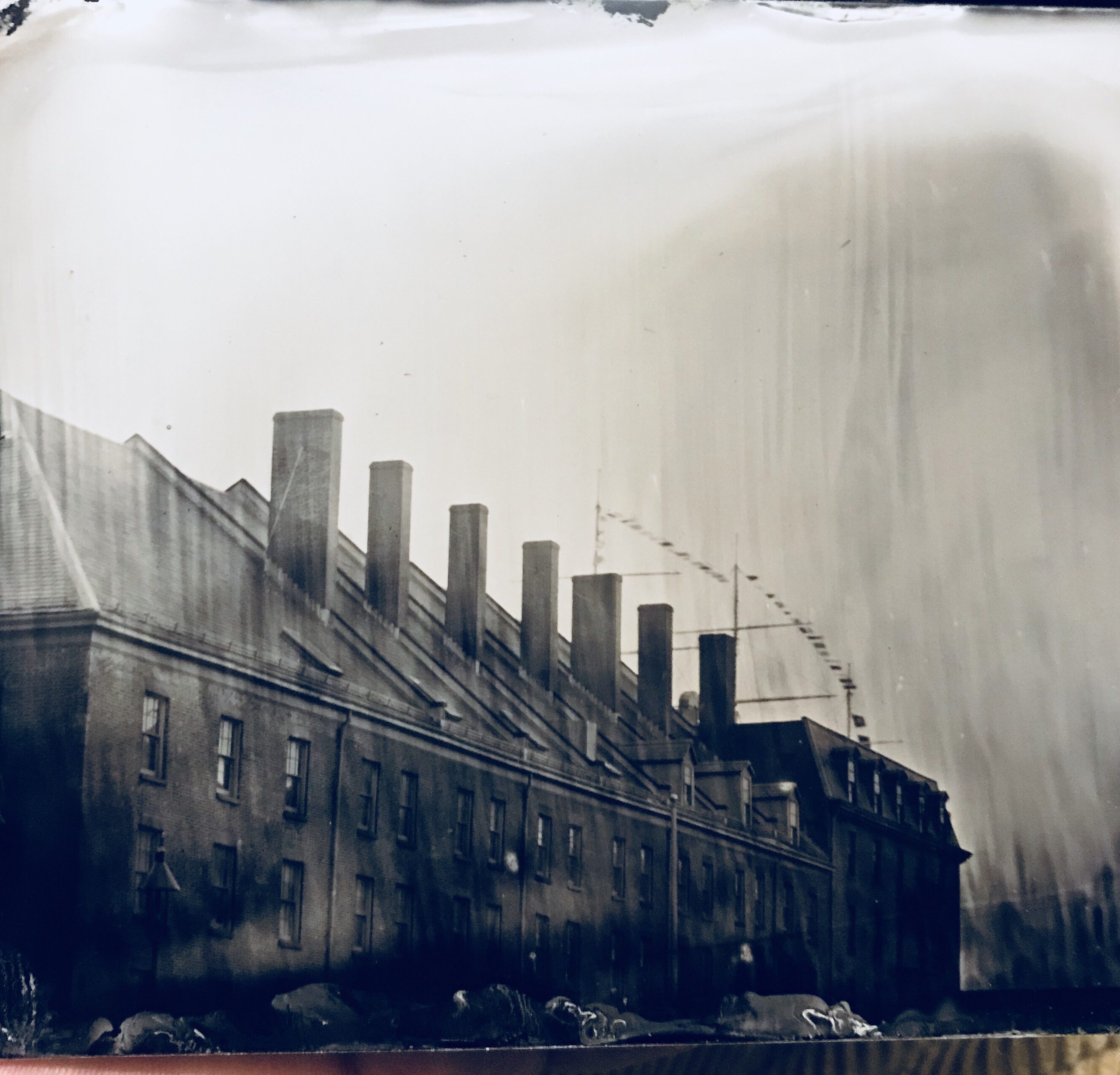
I had ordered a hundred lites of glass a few months ago, and am just now getting around to seeing how they fit into the film holder. Alas, it looks as though that are all in need of trimming.
I started out by first hand sanding each one, but that was painfully slow, so I resorted to power tools. Yeee Hah! Masks, and goggles on I began to grind away . Twenty five lites at a time . Set on edge, and clamped together. A spray bottle of water at hand to keep the glass dust down, and away we go.
All went well, and tomorrow I shall hand sand all the edges to be sure that the risk of being cut is minimized. Being cut is not the problem, but rather the fixer being used. The ambrotypes get developed in an acidic solution, and then get thoroughly rinsed to not only halt the development, but to also remove any acid. This is important because the next step is to fix the plate in a %2 solution of potassium cyanide. So, no sharp edge on the glass, and no acid.
A %2 solution of potassium cyanide in a small cut is less of a concern than getting any type of acid in the fixer. This would result in the formation of hydrogen cyanide gas. Bad stuff
The next day I took advantage of the early morning light to do some work. It has been some time since I have done an ambrotype, similar process to a tintype, but on glass. Tintypes are beautiful, but for me there is something magical about an ambrotype. It takes more work, with cleaning the glass to insure a good bond with the colloidian, and the last batch of glass I ordered needed to be trimmed to fit the plate holder. A pain.
The plates that I use for tintypes are set to go. All one needs to do is peel off the protective film, pour on the colloidian, and sensitize. easy peezy.
One of the advantages with an ambrotype is that by changing the exposure, and development you have a glass plate negative that can then be used to make prints.
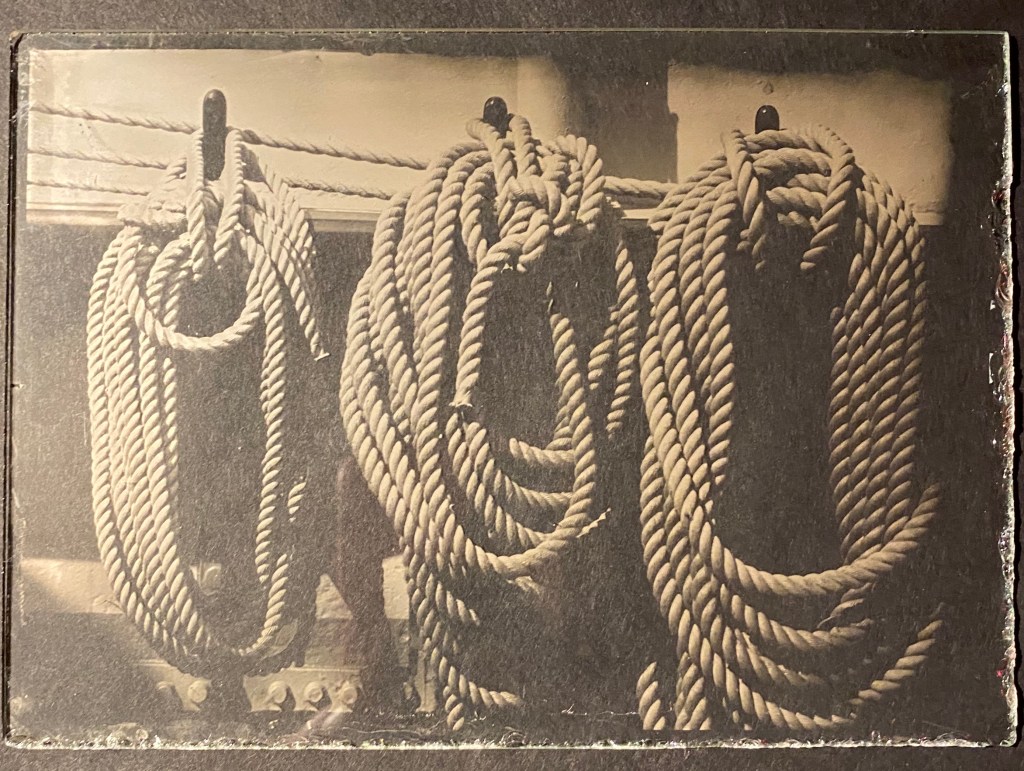
The ambrotype above appears as a positive image when it is placed on a black background. The emulsion side, which is very vulnerable to being scratched, will be coated with varnish. The backside gets a coating of asphalt varnish.
A hundred more plates to trim, and wash. Good rainy day project.
Pleasure do share these posts on social media, it is a big help
 Webster’s Wet Plate
You must be logged in to post a comment.