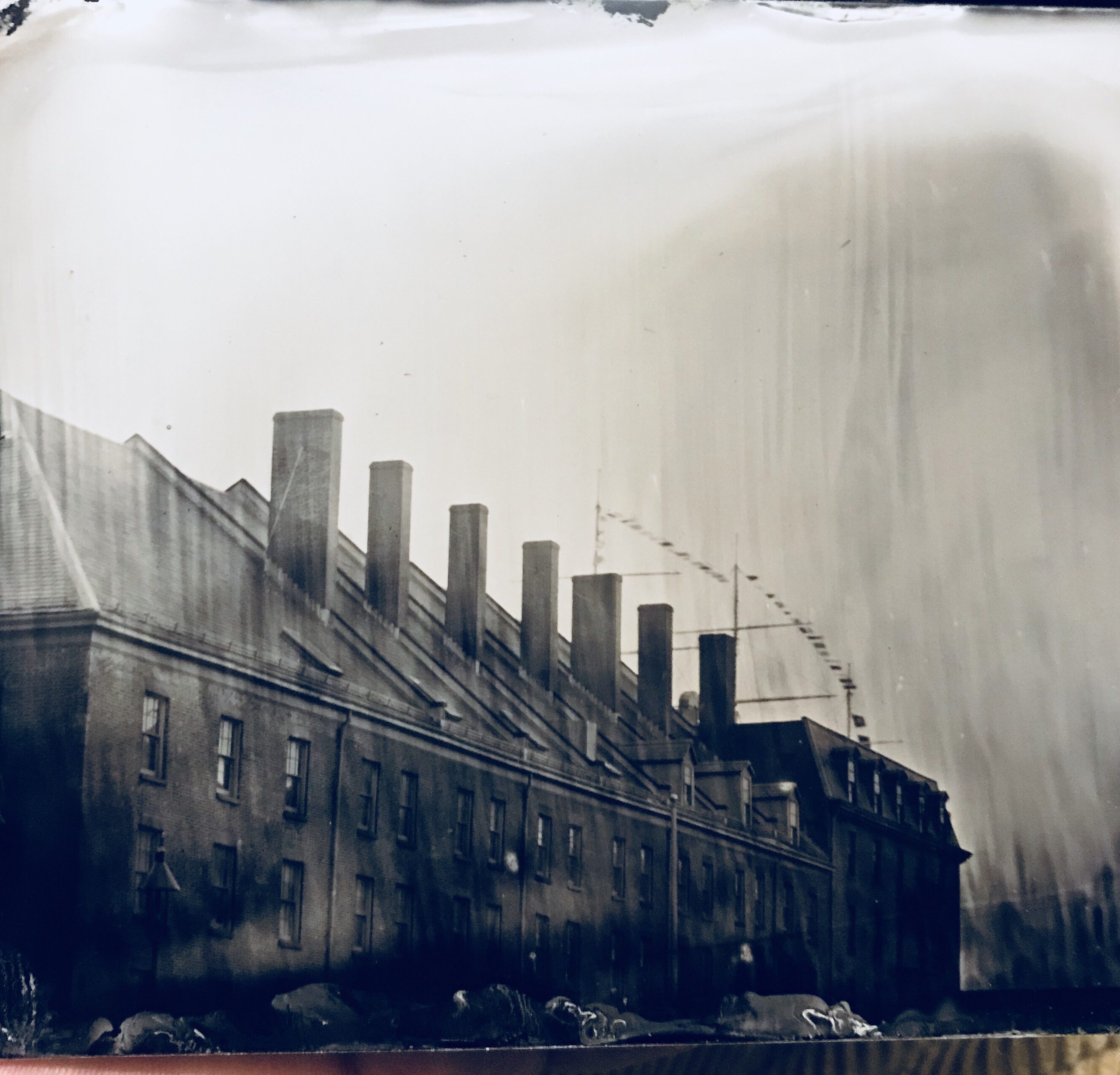
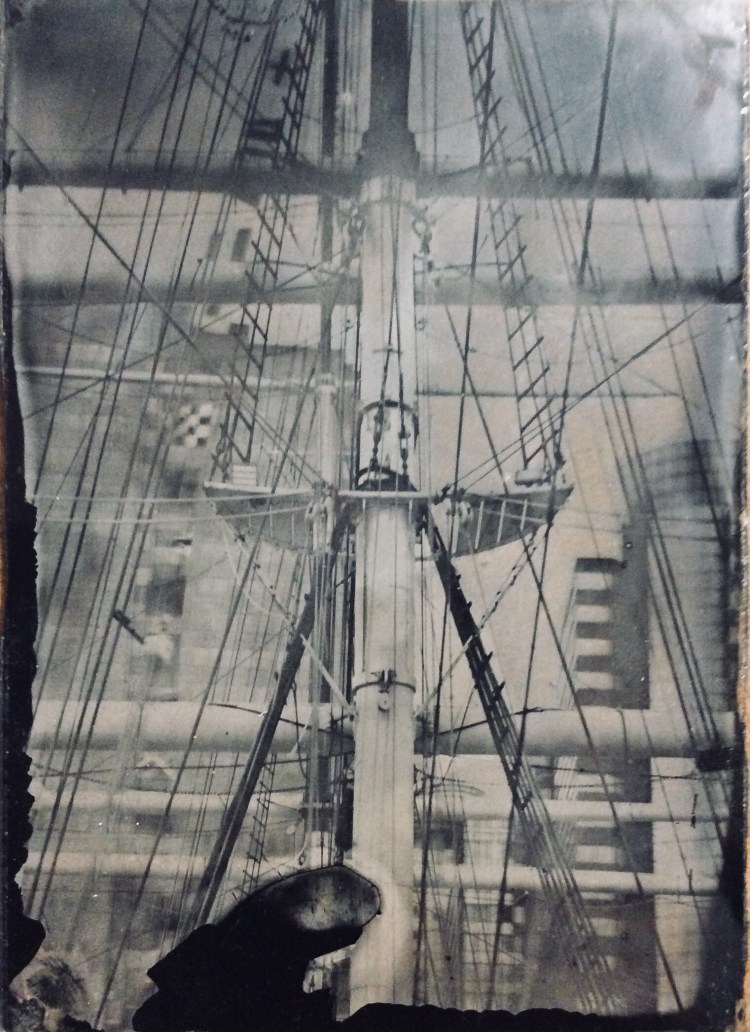
One of the joys of working in the field with my portable darkroom are the many opportunities that I have to explain the fascinating process of wet plate photography. Perhaps because of the willingness of the photographer on the Erie Canal towpath, read the About section, I feel an obligation to do the same. Though most curious onlookers, and I get my fair share, stay for a brief moment, I have had the opportunity, and pleasure to walk a few people through the entire process from start to finish.
It takes me less than five minutes to set up, and begin shooting. I spent the better part of a day just setting up, and breaking down my cart in order to become as efficient as possible. I hoped by doing this that I would not hesitate setting up for a shot in future outings.
Once the cart is ready I position my tripod, and mount the camera. This takes a few minutes. It is not difficult, but finding the correct location for a beautiful composition is the most important part of the sequence. That done, it is time to prepare a plate.
Glass is my preferred material. It is a bit more involved in getting ready, cutting to size, filing down the edges, and most importantly washing. In order for the colloidian to adhere well the glass must be spotless. Nothing worse than having a bad pour, or watching you image slide of a glass plate just because of a poor cleaning job. PPPPP!
A clean plate in hand, I begin the first step of pouring the colloidian. About the viscosity of warm maple syrup, and about as messy, the abject is to pour a nice, round puddle onto the center of the glass, and without having it run off the edges, get a good even coat. This takes practice, and the first few times it creates a bit of a mess, and the colloidian is not cheap.
With the plate poured it now goes into a bath of silver nitrate. This is where it will become light sensitive. I set my timer, and after three minutes I remove the plate, let as much excess silver bath drip back into the box, and then load the plate into the film holder.
I double check my camera, reposition, and refocus if needed, and then I load the film holder into the back. Depending on the light conditions, this method only responds to UV light, it can be anywhere from a second, to a few minutes exposure. The shutter is cocked, and fired. Out comes the film holder and to the portable darkroom cart I go.
The glass plate is removed from the holder, and under red safety light I begin the development process. A small amount of developer is poured onto the plate, and with in a few seconds an image appears. Waiting for the right moment, I stop the development by washing the plate with water. At this point the plate is no longer light sensitive, and it can be brought out into the daylight for fixing.
A milky looking image at first, and then the fixer, a weak solution of potassium cyanide, is poured over the plate. The image will vanish, and then begin to reappear. It is always amazing to watch.
Now the plate is washed, and then dried. Back home it will receive a coat of varnish, then carefully wrapped, and stored.
The process for making a tintype is nearly identical, though the plate comes covered with a protective film that gets peeled off just before pouring on the collodian.
I hope you enjoyed this brief explanation, and if you happen to see me and my cart, do stop and say hello.
 Webster’s Wet Plate
You must be logged in to post a comment.